In the Shoes of a CMO: Marilyne Dupuy (Napta) on B2B Branding, ABM and International Marketing Challenges
Marketing
Marilyne Dupuy has been CMO of Napta for six years. She joined this staffing and resource management solution for consulting firms, IT services companies (ESNs) and audit firms to build the marketing team and support the shift from a focus on SMEs to large corporations.
Before Napta, she cut her teeth on the B2C side, first at an agency and then on the advertiser side, notably as Global Brand Manager at Kapten. Now leading a team of six, Marilyne Dupuy shares her vision of the CMO role.
Marilyne Dupuy: When I arrived, the marketing strategy was purely based on acquisition: LinkedIn Ads, outbound, webinars... I remember a campaign at €3.50 per lead (prospect), against a benchmark of €70. We were convinced we had found a miracle recipe. In reality, not a single lead turned into a purchase. We were talking to everyone, including groups like L’Oréal or EDF, who sometimes didn’t even know the term staffing. We ended up focusing on consulting, ESNs and audit, sectors that have a real financial reason to address this topic.
M.D.: By looking at the CAC (customer acquisition cost) and the time spent on the sales side educating a market that wasn’t ready. It took us from a “spray and pray” approach to an ABM (account-based marketing) approach, which targets the most relevant accounts by name. We chose to focus on accounts with more than 500,000 employees. This shift also forced us to reposition the brand: Pick Your Skills locked us into a 100% HR image. My conviction is that brand weighs enormously. So we invested in awareness, and worked on communication channels directly linked to sales.
M.D.: There were two of us at the start, very communication-oriented. When we made the Enterprise shift, we moved part of the team toward RevOps (revenue & operations) and AI, and strengthened communication with one point person per country (France, UK, Germany). Today we are six, and eventually we would like to complete the team with a Product Marketing Manager.
M.D.: Our target was present at every trade show, but as spectators. We created an annual study and an award in partnership with La Lettre du Conseil, an independent media outlet in the sector, to ensure our legitimacy. We sold it internally not as a marketing expense but as quality time between the salespeople and the target. Our indicator is not the number of people attending the event, but rather those who talk about it around them once they have left. Only the physical event naturally generates this kind of sharing; even webinars with external experts don’t manage it.
The podcast and the study also help us get our clients to speak, since they don’t always accept that we communicate about them directly: when KPMG speaks indirectly through these channels, it carries a strong message without us having to formulate it ourselves.
M.D.: For us, the website is about consideration rather than acquisition. So it is not our priority to tackle SEO and GEO head-on; we treat them as a consequence of actions already underway in public relations. We track this with HubSpot for AEO and Mangools for SEO. It will probably be a more front-and-center topic in 2027.
M.D.: For creative work, we chose to collaborate with an agency, probably out of culture. There is an emulation and a sharing of skills that maximize the result. A specialized freelancer knows the sector better and sometimes costs less, but we have a very small pool of trusted people, and we prefer to wait for their availability rather than give in to urgency. On training, we are convinced by the coaching/mentoring format, to build skills on concrete topics.
M.D.: Enormously, notably through the “Tech Marketing Leaders” Slack network, launched by Alan’s former CMO. I first ask my peers whether they have already dealt with the subject and whether they have learnings or recommendations. This method saves me time and money. It is also an argument I used to justify our awareness spending to my founders, by asking them how they themselves had chosen their tools. The answer is almost always the same: on a peer’s recommendation.
M.D.: Curiosity remains criterion number one, but it is not enough if it doesn’t translate into concrete progress. What I look at is a person’s ability to truly learn from that curiosity and to build skills over time. Several people on my team have been here for around five years and have grown with the company.
On the international side, however, everything we have built remains hard to replicate: Germany and the United Kingdom have different habits, and capitalizing on the brand in one country guarantees nothing elsewhere. You have to start the bet over with a new playbook in each market.
M.D.: I have the impression that the role is rather expanding. It may be dead in its most rigid form, one playbook per channel following the same ROI everywhere. AI frees up a creativity that forces us to start again from a more refined reflection on what can serve the target, the salespeople and the company. This requires humility: some younger profiles have less experience but find it easier to test new approaches. We move from a coach-manager posture to a leader-manager one, which is not the most comfortable position day to day.
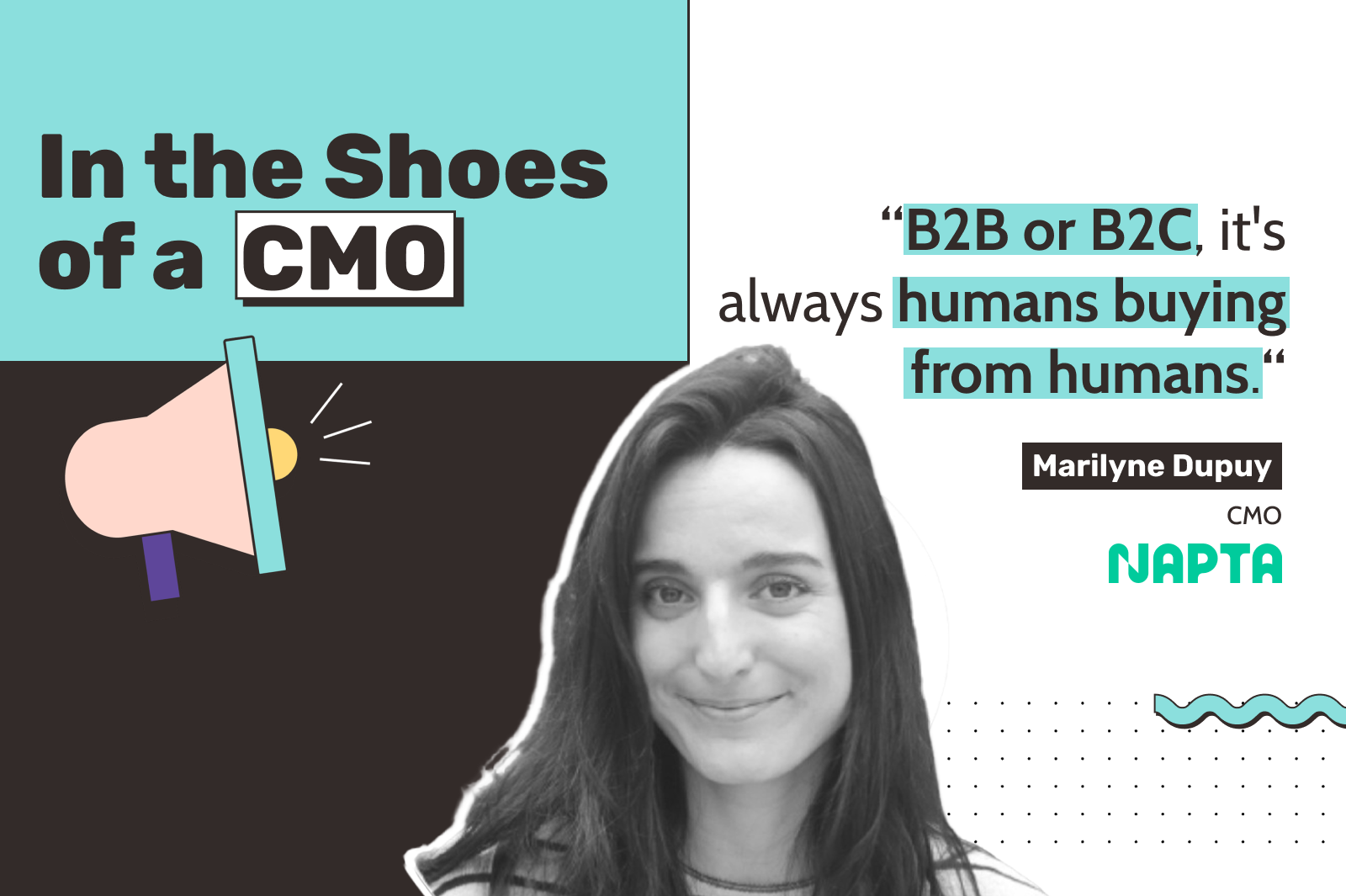
M.D.: I would ask that we not drown in the mass of content circulating today. You have to build a brand that stands out through the attributes you choose to give it. The quantity of information no longer makes the difference; quality must come first. I am convinced that, B2B or B2C, we are still dealing with humans buying from humans, and that people also buy a value system along with the product. Even SAP or Workday, who could be content with their leadership position, keep investing in events and brand, just as Coca-Cola and Pepsi keep advertising.
L’équipe Spaag.
Spaag is a consulting firm specialising in growth marketing, digital marketing, data, and AI. Our mission is to support our B2B and B2C clients in achieving their business objectives, both in France and internationally.




.png)